
A mattress won’t last indefinitely, even if it performs well when you first purchase it, and if you’ve been using the same one for several years, you might at some point begin to question whether it’s time to get a new one.
Then, how long does a mattress last? Most mattresses have a lifespan of about 7 to 10 years, but there is no set expiry date; some last longer than this, while others may begin to lose their comfort and support earlier. The length of time depends on a number of factors such as the type of mattress, the materials used, the way it’s constructed, how frequently it’s used, and the care it receives.
Rather than replacing a mattress just because it has reached a certain age, you should consider its general condition and the way it feels when you are sleeping on it.
There isn’t one exact lifespan that applies to every mattress. Different materials and construction methods can affect how long a mattress stays comfortable and supportive.
As a general guide:
These are general estimates, not guarantees. A well-made mattress that is properly cared for may last longer, while one that gets heavy daily use may show signs of wear sooner
Age is one thing to consider, but it isn’t the only one. The condition of your mattress can tell you a lot about whether it still has plenty of life left.
The materials used in a mattress and how it is built can affect its durability. Higher-quality materials and solid construction may help a mattress maintain its comfort and support for longer. That doesn’t mean every expensive mattress will last longer, though. The quality of the materials, construction, and how the mattress is used all matter.
Different types of mattresses can have different expected lifespans.
Latex mattresses are often among the longest-lasting options. Memory foam can also provide many years of use, while innerspring and hybrid mattresses may have shorter or similar lifespans depending on their construction and materials.
How often a mattress is used can also affect how quickly it wears out.
A mattress that is used every night will naturally experience more wear than one in a guest room that is only used occasionally. Regular use doesn’t automatically mean a mattress will wear out quickly, but heavier use can contribute to faster wear over time.
The amount of pressure placed on a mattress can affect how it wears over time. Body weight, sleeping position, and where pressure is concentrated can all play a role.
For example, sleeping in the same position every night can put repeated pressure on the same areas of the mattress
There is no single number that tells you exactly how long your mattress will last. The 7–10 year range is a useful general guideline, but the actual lifespan depends on the mattress itself and how it has been used and maintained.
The condition of your mattress matters just as much as its age
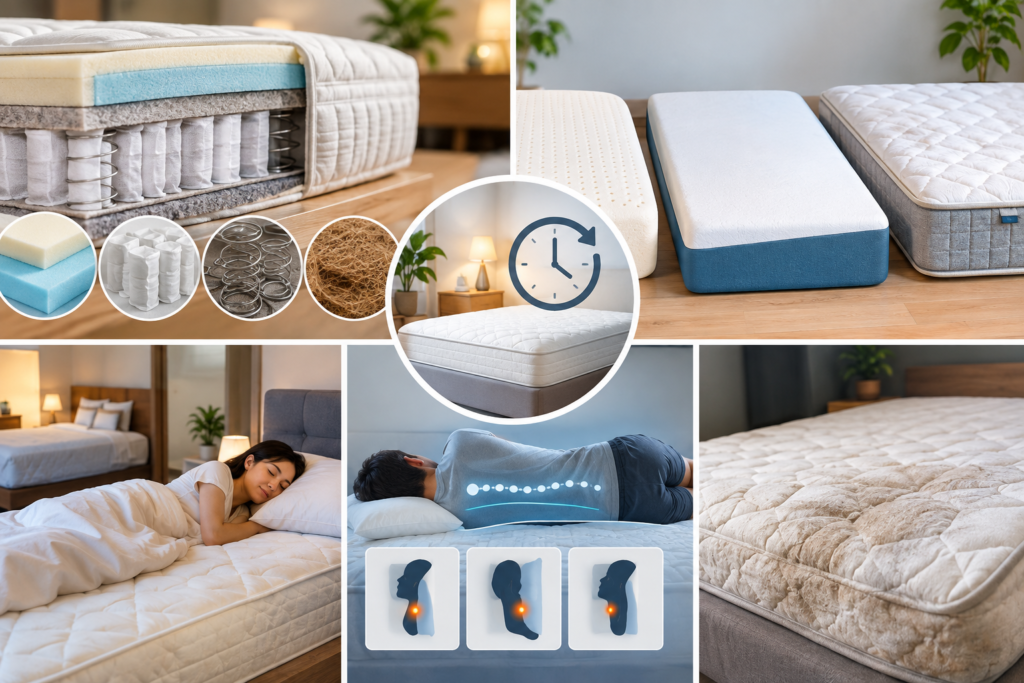
You don’t have to wait for your mattress to reach a certain age before deciding it’s time for a new one. In many cases, the condition of the mattress tells you more than its age.
Here are a few signs that your mattress may be getting toward the end of its useful life
You don’t have to wait for your mattress to reach a certain age before deciding it’s time for a new one. In many cases, the condition of the mattress tells you more than its age.
Here are a few signs that your mattress may be getting toward the end of its useful life
Some sagging can happen naturally as a mattress gets older, but a deep or permanent dip can affect how well the mattress supports you.
Take a close look at the entire mattress if you notice a noticeable dip in the area where you usually sleep
Waking up sore, stiff, or uncomfortable may be a sign that your mattress is no longer providing the support or comfort you need.
Of course, your pillow, sleeping position, and other factors can also affect how you feel in the morning. But if you started noticing discomfort after your mattress began changing, it may be worth considering a replacement.
Sometimes a mattress simply stops feeling right.
If you find yourself tossing and turning or struggling to find a comfortable position, your mattress may no longer be giving you the comfort you need. In that case, it might be time to start looking at your options
Visible or exposed springs can be a sign that a mattress is worn out, especially with innerspring or hybrid designs.
If you can see or feel springs through the mattress, it’s a good reason to consider replacing it.
A permanent dent or body impression where you usually sleep can be a sign that the mattress has lost some of its ability to recover its original shape.
If those impressions are affecting your comfort or support, it may be time to consider a new mattress
If you consistently sleep better on beds in hotels, guest rooms, or somewhere else, pay attention to how those mattresses feel compared with your own.
This doesn’t automatically mean your mattress needs replacing. However, if other beds feel significantly more comfortable, it may be worth taking a closer look at your mattress
A mattress being seven years old doesn’t automatically mean it’s ready to be replaced. Think of seven to ten years as a general guideline rather than a strict deadline.
If your mattress is within that age range, look for signs of wear and changes in comfort or support. Its condition is more important than simply reaching a particular number of years.
Your mattress won’t last forever, but with a little care, you can help it last as long as possible
A mattress protector helps protect your mattress from sweat, spills, and accidents.
Make sure you choose the right size and clean the protector according to the manufacturer’s instructions
Use the foundation or base recommended for your mattress.
The right support can help your mattress perform as intended and may also be important for maintaining the mattress warranty
Clean your mattress according to the manufacturer’s instructions.
Avoid harsh cleaners or soaking the mattress. Occasional vacuuming can help reduce dust and debris that build up over time.
Some mattresses are designed to be rotated, while others don’t need to be.
Always check the manufacturer’s instructions before rotating your mattress. If rotation is recommended, follow the suggested schedule.
Jumping puts unnecessary stress on a mattress that normal sleeping doesn’t.
If you’d like your mattress to last, skip the gymnastics and save the jumping for the playground.

A mattress topper can make an older mattress feel more comfortable when the mattress itself is still in reasonably good condition.
If your mattress is still supportive but you want to change the feel or add some cushioning, a topper can be a useful option.
A topper can make a mattress feel softer and provide an extra layer of comfort. However, it isn’t a replacement for a mattress that is badly worn out or damaged.
If your mattress has serious sagging, exposed springs, or other structural problems, replacing the mattress is usually a better option than relying on a topper.
Not necessarily.
While seven years is often used as a general guideline for mattress replacement, it isn’t a rule that applies to everyone. There are several things to consider when deciding whether a seven-year-old mattress needs to be replaced.
Look at its age and condition. Is it still comfortable? Does it provide the support you want? Are there large dents or permanent indentations where you sleep? Are there any exposed springs? Do you sleep better on other beds?
If your mattress is eight years old but still feels comfortable and supportive, you may not necessarily need a new one.
On the other hand, if your mattress is only five years old but has started to sag or become uncomfortable, it may already be time to replace it.
In the end, replace your mattress when its condition and comfort suggest that it’s time—not simply because a certain number of years has passed

Smart home & kitchen products, honest reviews and useful buying guides to make everyday living easier and better.
© 2026 HOMEPRIMESPOT . All Right Reserved.